Ligament Sprains
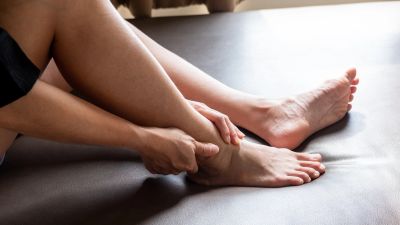
What Are Collagenous / Ligament Sprains?
Ligament sprains occur when the collagen fibers that stabilize a joint are overstretched or torn. Ligaments connect bone to bone and act as the joint’s primary stabilizers. When injured, they create pain, swelling, and mechanical instability that can affect movement and load tolerance.
Because ligaments are made of dense collagen with limited blood supply, they heal more slowly than muscle tissue. Proper physiotherapy is essential to ensure the ligament heals with the correct tension and alignment, preventing chronic instability or reinjury.
Types of Ligament Sprains
- Grade I (Mild): Micro‑tearing of collagen fibers; mild pain and swelling
- Grade II (Moderate): Partial tearing; noticeable instability and difficulty weight‑bearing
- Grade III (Severe): Complete rupture; significant instability, often requiring surgical consultation
Common Areas Affected
- Ankle ligaments (ATFL, CFL, deltoid)
- Knee ligaments (MCL, LCL, ACL, PCL)
- Shoulder ligaments (AC joint sprains)
- Wrist ligaments (TFCC, scapholunate)
- Spinal ligaments (facet joint capsule irritation)
Typical Symptoms
- Sharp pain at the joint
- Swelling or bruising
- Feeling of instability or “giving way”
- Difficulty weight‑bearing or moving the joint
- Tenderness along the ligament
- Reduced range of motion
Symptoms may worsen with sudden movements, uneven surfaces, or repetitive strain.
How Physiotherapy Helps
Physiotherapy ensures the ligament heals with proper tension, alignment, and neuromuscular support. Without structured rehab, ligaments often heal in a lengthened or weakened state, increasing the risk of chronic instability.
Treatment Focus
- Manual therapy to reduce protective muscle guarding
- Joint mobilization to restore normal mechanics
- Bracing & taping for stability during early healing
- Strengthening protocols targeting stabilizing muscles
- Neuromuscular training to retrain joint control
- Biomechanics analysis to correct movement faults
- Gait or movement retraining for lower‑limb sprains
- Education on load management and reinjury prevention
When to Seek Help
Book an assessment if you experience:
- Joint pain after twisting or impact
- Swelling or bruising around a joint
- A feeling of instability or “giving way”
- Difficulty weight‑bearing
- Pain during sports or repetitive movements
Prompt treatment prevents long‑term joint laxity and recurrent sprains.